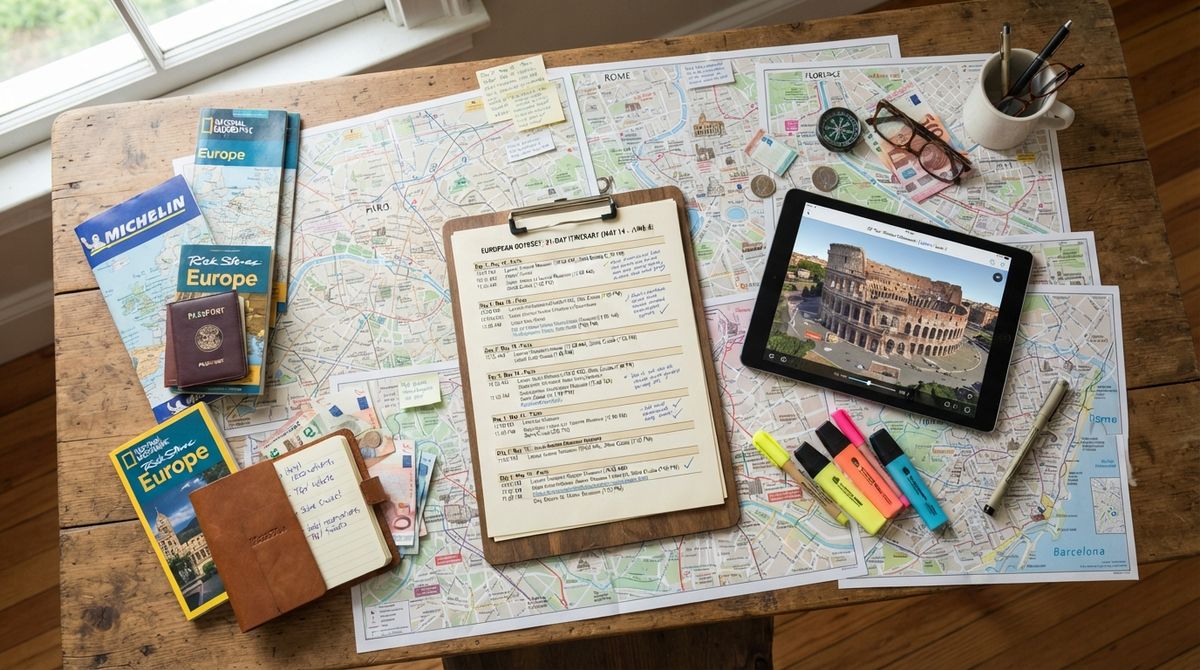
A journey with several stops can feel exciting at first and overwhelming a week later. Each city brings its own check-in times, transport schedules, and local habits, and small gaps in planning can turn a pleasant route into a stressful chase. Travelers have long relied on printed itineraries that fit in a jacket pocket, while newer trip planners gather bookings, maps, and reminders into one digital place. Both tools can keep a route on track. The best choice depends on how many stops are planned, how often the route changes, and how much of the trip will happen without a dependable connection.
The Printed Itinerary as a Reliable Anchor
A printed itinerary is simple, portable, and easy to share. A single sheet can list each date, city, accommodation address, and transport booking in the order it will happen. Nothing needs a battery or a signal, which matters on overnight trains, remote roads, or any stretch where coverage is patchy. Many travelers also find that writing the plan by hand helps them notice an impossible connection or a missing night before the trip begins.
A paper plan still needs careful upkeep. Confirmation numbers can change, and a printed time becomes wrong as soon as an operator updates a schedule. Readers may also want to visit Product Items. A tidy folder with one page per stop keeps the plan easy to read at a busy station.
Paper also works well for a route that crosses borders or time zones, because a printed page does not depend on roaming settings. Carry a copy of the key bookings in a separate place from the original so that a lost bag does not erase the whole plan. This small precaution often matters more than any feature a digital tool can offer.
Trip Apps That Pull Everything Together
Digital trip planners gather tickets, maps, opening hours, and reminders in one application. They can send an alert when a train platform changes or when it is time to leave for the airport. Shared access lets a travel companion see the same plan without asking for updates, and most apps store copies of booking emails so nothing is lost in a crowded inbox. When a route changes in the middle of the journey, a digital plan can be adjusted within minutes.
Digital tools bring their own risks. Phones can run out of battery, roaming charges can be high, and a poorly organized app can bury a crucial booking under a pile of notifications. You can also visit latest-news-today.com for more reading. Checking which data the app stores also protects personal details on the road.
Connection and timing also shape the choice. A traveler who expects reliable coverage at every stop can rely on an app, while one heading into quiet countryside should plan for long gaps. Checking the expected conditions before each leg makes the decision clearer and reduces surprises once the journey has begun.
Choosing a Method for the Route
The number of stops is a useful guide. A route with two or three destinations and fixed bookings often suits a single printed sheet, since the plan rarely changes. A longer route with flexible dates benefits from a digital planner that can move bookings and recalculate travel times. For a related read on this site, see Co-working Passes or a Hotel Desk for a.
Consider the conditions you expect. Remote areas and long rail journeys may favor paper, because a dead phone can leave a traveler without a map. Busy city stays with many short transfers often favor digital reminders, since timing matters more than a single fixed sheet. Many people combine both, keeping a paper summary in a bag while the app handles changes.
Accommodation details deserve their own section in any plan. Store the address in the local language, note the check-in window, and save the host’s contact method next to the booking. These details are easy to lose during a busy transfer, yet they become urgent the moment a traveler arrives tired at the door.
A Hybrid Routine for Every Stop
A hybrid routine starts with the paper summary. Write each stop, date, and booking code on one page, then store a digital copy with the same layout in a shared folder. Before leaving each city, review the next leg, confirm the exit time, and check the weather. This brief ritual catches small problems early and keeps the route moving smoothly.
After the trip, record what worked and what did not. Note which connections were tight, which accommodations were hard to find, and which reminders proved useful. A short review helps the next route begin with better information, and it turns each journey into practical knowledge for the following one.
A multi-stop route rewards careful preparation, whether that means a folded page in a pocket or a shared digital plan on a phone. The printed itinerary offers reliability and independence from signal, while the planning app offers speed and easy changes. Use the tool that fits the route, keep a backup of the essentials, and adjust the plan at each stop so the journey stays enjoyable from start to finish.