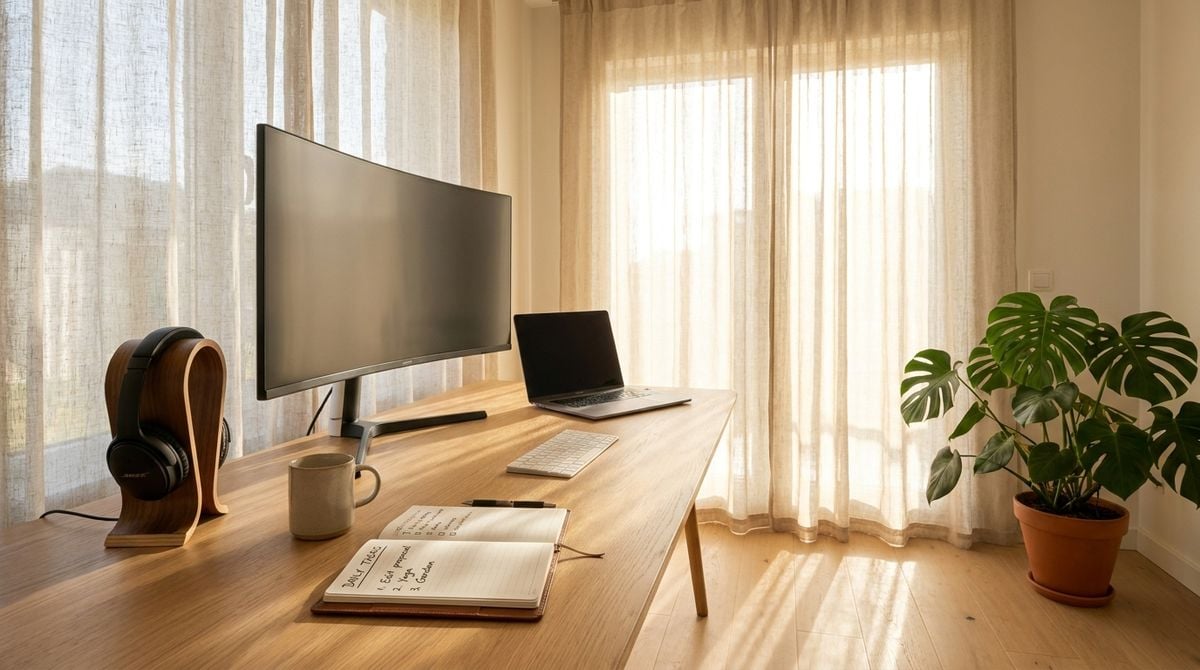
A founder on a business trip often ends up working from a hotel room that was designed for sleeping, not for long hours at a desk. The space may be small, the desk may be a sliver of wood beside the window, and the lighting may favor the bed rather than the work. Even so, a careful setup can turn a plain room into a focused workspace for a day or two. The guidance below is general information on arranging a compact office inside a hotel room without disturbing the people sharing the building.
Choosing a Room With the Right Working Layout
Ask for a room with a proper desk or a table near a window, because natural light and a flat surface make a large difference over a full day. Check the position of the power sockets before arriving, since a desk placed far from a socket leads to trailing cables across the carpet. Request a higher floor if the street is noisy, although the noise of lifts and corridors can still carry in some buildings. Confirm that the internet connection is strong enough for video calls in the room you are given.
Readers may also want to visit Exxointerior.com. Compare the room description with the actual layout once the door is open, and move the furniture gently if a better arrangement is possible. Keep the bed out of the working area where you can. A single change of position often makes the room feel like an office rather than a bedroom.
Setting Up a Compact Desk With Only What You Need
A hotel desk rarely has space for a full kit, so pack a short list of essentials and leave the rest in the bag. A slim laptop stand, a small lamp and a compact power strip are usually enough for a productive day. Place the laptop at eye level so that the neck stays relaxed during long calls. Keep the notebook and the pen in a single pocket of the bag so that the desk stays clear.
You can also visit BestsofaCovers for more reading. Clear the desk at the end of the day so that the next morning starts from a neutral surface. Store cables in a small pouch rather than letting them spread across the bedside table. A tidy desk also gives the mind a clear signal that the working day has finished.
Managing Calls and Quiet Hours in Shared Walls
Hotel walls are thin enough that a loud call can reach the neighbors, so plan calls for times when the corridor is quiet. Use headphones with a good microphone, and keep the window closed if traffic noise may interrupt the conversation. Speak at a steady volume, and avoid pacing back and forth while presenting slides. A simple sign on the door can warn housekeeping that a meeting is in progress.
Long calls also need water and a comfortable seat, so bring a reusable bottle and a cushion for the chair. For a related read on this site, see Making a Compact Hotel Room Work for Three. Schedule short breaks between calls so that the eyes and shoulders can rest. A brief walk down the corridor can reset attention before the next session begins.
Handling Documents and Devices Safely
Paper documents can spread quickly across a small room, so keep them in a labeled folder that stays closed when not in use. Lock the laptop in the room safe when leaving the building, and keep backup copies of important files in a secure cloud location. Carry a spare charger for the phone so that a dead battery does not interrupt the day. Make sure the room key card stays with you, because a lost card can delay the whole schedule.
Review the documents each evening to decide which papers must be taken to the next meeting. Shred or recycle drafts that are no longer needed, since hotel bins are often emptied by staff who do not know what the papers contain. Use a strong password on the laptop and log out of shared computers in the lobby. Good habits with documents protect both the business and the people who work for it.
Packing Up the Room at the End of the Stay
Before checking out, walk around the room and collect every cable, charger, notebook and pen from the desk and the bedside table. Check the drawers, the safe and the bathroom shelf, because small items are easy to leave behind after a busy trip. Return any room key or card at the desk, and ask for a receipt if one is offered. Review the stay briefly so that the next trip can benefit from what worked.
A Hotel Room Can Still Work Well
A traveling founder can turn a modest hotel room into a sound office when the desk, the calls and the papers are handled with care. Choose the room with the right layout, pack only what is needed and keep the noise and the paperwork under control. A steady routine, repeated on each trip, makes the setup feel familiar even in an unfamiliar city.