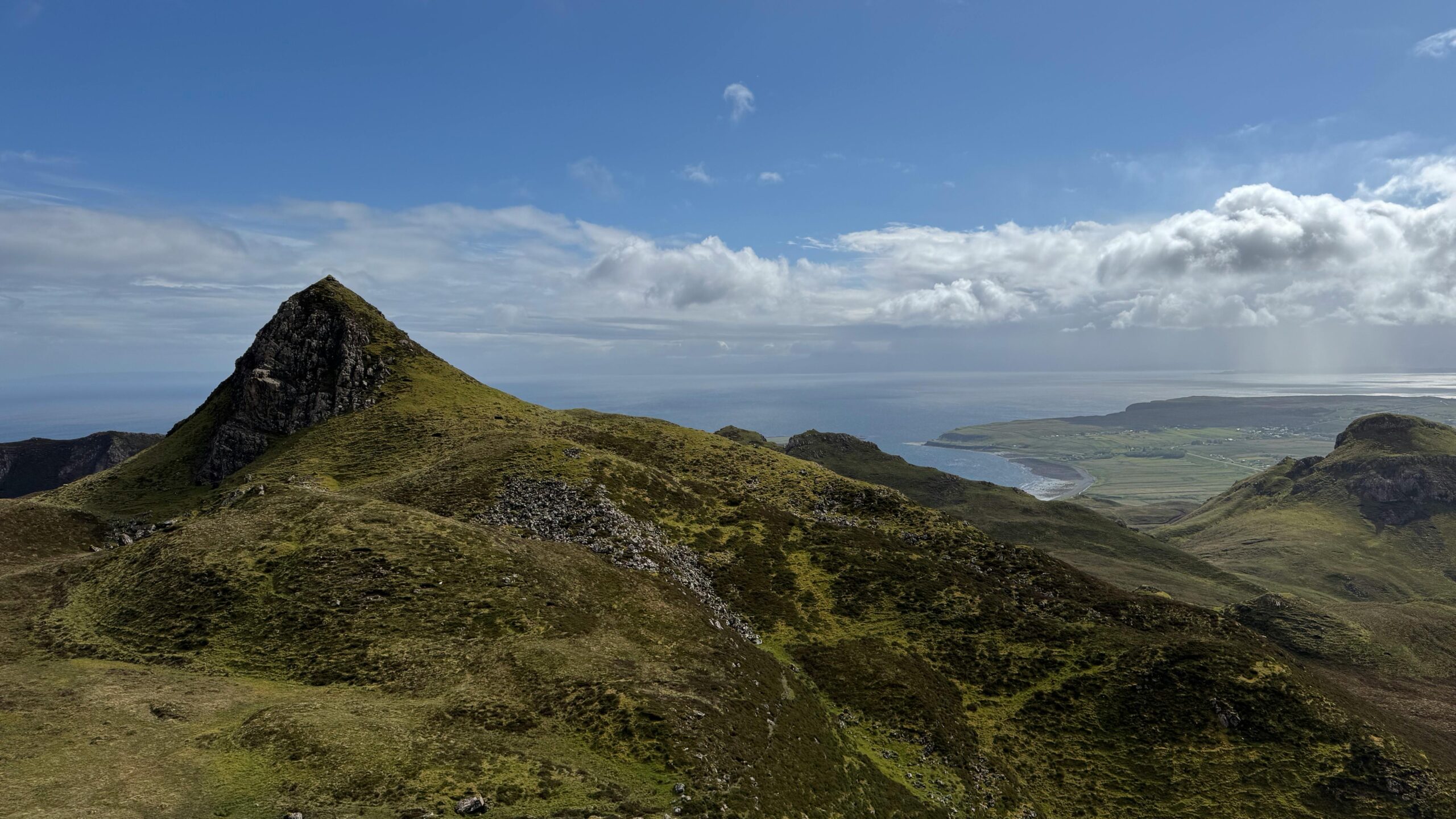
There’s something about the Isle of Skye that feels a bit… otherworldly. Maybe it’s the jagged peaks of the Cuillin Mountains, the mist rolling over the moors, or the fact that nearly every rock seems to come with a story attached.
But beyond the dramatic landscapes and Instagram-famous fairy pools, Skye has a long, layered history that’s equal parts brutal, fascinating, and deeply Scottish.
Let’s peel it back a bit.
Early Settlers: Before the Clans
Long before tartan and clan rivalries, Skye was home to ancient peoples dating back to the Mesolithic period—around 7000 BC. Archaeological finds suggest early hunter-gatherers lived off the land and sea, leaving behind tools and traces of settlements.
By the Iron Age, the island was dotted with brochs (circular stone towers), defensive structures that still puzzle historians today. These early inhabitants were likely part of the broader Celtic culture that spread across Scotland.
Then came the Gaels, bringing with them language, traditions, and a culture that still defines Skye today. Scottish Gaelic is still spoken here, which tells you just how strong those roots run.
Viking Invasions: When Norse Took Over
Around the 8th century, everything changed when Viking raiders from Norway began arriving on Skye’s shores.
And they didn’t just raid—they stayed.
Skye became part of the Norse Kingdom of the Isles, ruled by Scandinavian leaders for centuries. You’ll still see this influence in place names across the island, many of which have Old Norse origins.
One of the most important turning points came with the Battle of Largs, which led to the eventual decline of Norse control. By 1266, Skye officially became part of Scotland under the Treaty of Perth.
The Age of Clans: Power, Loyalty, and Feuds
If Skye had a “main character era,” this would be it.
From the medieval period onward, the island was dominated by powerful Highland clans—most notably the Clan MacLeod and Clan MacDonald.
These weren’t just family groups—they were political powers, controlling land, armies, and allegiances. And as you’d expect, things got… tense.
Feuds between clans were common, often violent, and sometimes downright legendary. Castles like Dunvegan Castle (home of the MacLeods) still stand as reminders of this era.
Skye during this time was a place of loyalty and survival. You backed your clan, or you didn’t last long.
The Jacobite Uprisings and Bonnie Prince Charlie
In the 18th century, Skye found itself wrapped up in one of Scotland’s most famous conflicts—the Jacobite uprisings.
After the failed Battle of Culloden, Charles Edward Stuart fled across the Highlands, eventually making his way to Skye.
Here’s where things get properly story-worthy.
He was helped by Flora MacDonald, who disguised him as her maid (yes, really) and helped him escape to the mainland. It’s one of those tales that sounds made up until you realize it’s very much not.
Today, both are remembered across the island, and their story is baked into Skye’s identity.
The Highland Clearances: A Dark Chapter
Not all of Skye’s history is romantic or heroic.
The late 18th and 19th centuries brought the Highland Clearances—a devastating period when many tenants were forcibly removed from their homes.
Landowners replaced communities with sheep farming, which was more profitable but far less humane. Entire villages were emptied, and thousands emigrated to places like Canada and the United States.
This era left deep scars on Skye, both culturally and emotionally. It’s a big part of why the island feels both beautiful and a little haunting.
The Crofters’ War: Fighting Back
By the late 19th century, the people of Skye had had enough.
The Crofters’ War saw tenant farmers protest against unfair rents and evictions. One of the most famous incidents, the Battle of the Braes (1882), took place right here on Skye.
These protests eventually led to land reforms and better rights for crofters—small-scale farmers who still play a role in Skye life today.
It wasn’t a quick fix, but it was a turning point.
Skye Today: History Meets Tourism
Fast forward to today, and Skye has transformed into one of Scotland’s most visited destinations.
Places like the Old Man of Storr and Fairy Pools draw visitors from around the world, while the island’s history quietly sits beneath the surface.
You’ll find it in the ruins, the place names, the language, and the stories locals still tell.
And if you’re paying attention, you’ll notice that Skye isn’t just a pretty place—it’s a place that’s been fought over, lived in, shaped, and remembered for thousands of years.
Final Thoughts
The Isle of Skye isn’t just dramatic landscapes and moody weather (though it has plenty of both). It’s a place where history feels close—like you could almost trip over it if you’re not watching your step.
From ancient settlers and Viking rulers to clan battles and cultural survival, Skye’s story is anything but quiet.
And honestly, once you know the history, those misty hills hit a little differently.