A lush, green lawn is often seen as a sign of a well-kept home, but smart lawn care goes beyond simple curb appeal. When managed with intention, a lawn becomes part of a larger ecosystem—one that affects water use, soil health, local wildlife, and even neighborhood well-being. The choices homeowners make about watering, mowing, fertilizing, and pest control can have ripple effects across their yards and beyond.
Understanding how these choices interact with the natural environment is key to creating a yard that’s not only beautiful but also resilient and sustainable. This perspective shifts lawn care from being a chore to a form of stewardship that enhances both individual properties and the neighborhood as a whole.
Your Lawn as a Living System
A lawn isn’t just grass—it’s a living system composed of soil microorganisms, plant roots, insects, air, and water. All these elements interact, and the health of one affects the others. Strong, healthy soil supports deep root systems, making grass more drought-tolerant and less dependent on frequent watering. In contrast, compacted or nutrient-poor soil can leave turf weak and susceptible to weeds or pests.
Learning about local conditions—such as soil type, rainfall patterns, and seasonal temperature changes—helps you tailor your lawn care approach. For example, homeowners looking for regional guidance can explore resources like guidelines on lawn care practices in Eastpointe, Michigan, which provide insight into what grasses grow well locally and how seasonal care routines typically unfold.
Soil: The Foundation of a Healthy Lawn
Soil health is often overlooked, yet it’s one of the most important factors in lawn success. Compacted soil restricts air and water flow, making it difficult for grass roots to thrive. Aeration—poking small holes in the soil—improves this situation by enhancing water infiltration and encouraging roots to grow deeper.
Adding organic matter, such as compost, further enriches the soil and feeds beneficial microbes. These microbes help break down nutrients into forms that grass plants can use more easily. Over time, this reduces the need for synthetic fertilizers and leads to stronger, more resilient turf.
Watering Wisely
Watering is another area where smart decisions make a big difference. Many homeowners apply water too frequently or at the wrong times of day, which can lead to shallow roots and wasted water. The goal is to encourage deep root growth, which enables grass to better withstand dry spells and heat stress.
A good rule of thumb is to water early in the morning, when cooler temperatures minimize evaporation. Deep, infrequent watering—rather than daily light sprinkling—helps roots reach deeper into the soil. Tools like soil moisture meters or smart irrigation systems with rain sensors can help you avoid overwatering and adjust to actual conditions.
Mowing: Height Matters
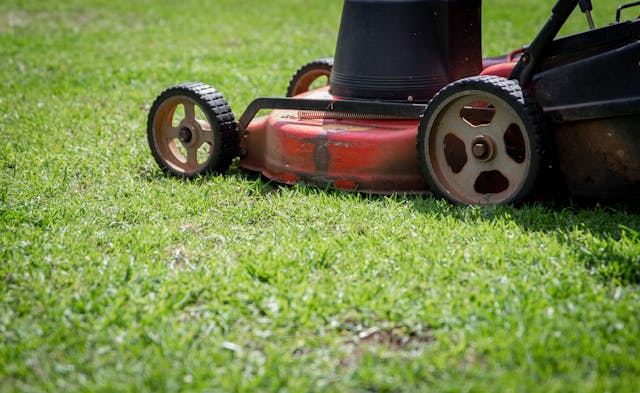
Mowing is one of the most common lawn tasks, but it’s not just about keeping grass short. Cutting grass too low—called scalping—can weaken turf by exposing soil to sunlight and increasing stress. Most experts recommend keeping grass blades at a moderate height—often around three to four inches depending on the grass type—to shade the soil and slow moisture loss.
Mower maintenance matters, too. Sharp mower blades make clean cuts, which help grass recover quickly. Dull blades tear rather than cut, increasing the risk of disease and stress.
Balanced Nutrients and Weed Management
Fertilizers provide nutrients that support growth, but they must be applied thoughtfully. Excessive fertilizer use can lead to nutrient runoff that contaminates stormwater and local waterways. Slow-release or organic fertilizer options supply nutrients gradually, reducing environmental impact while still feeding the lawn.
Weed issues often arise where grass is weak or stressed. A dense, healthy lawn naturally suppresses many weeds by limiting space and light. When weeds do appear, targeted removal and environmentally responsible treatments help manage them without unnecessary chemicals.
Beyond Your Yard
Thoughtful lawn care benefits your property and supports broader environmental health. Reduced water usage helps conserve a precious resource, while lower chemical inputs mean fewer pollutants entering local water systems. Additionally, strong, healthy lawns support pollinators and beneficial insects, contributing to richer local biodiversity.
Sharing your experiences with neighbors or participating in community gardening groups can spread these benefits more widely, turning individual efforts into neighborhood-wide improvements.